

The Flair of the Epoch
Preparation for the Grand Ball

I. The Helmhalle in the Old Gauging Office
Our historical stage
II. A Hall with Vision
Architecture & character
III. The Place of Preparation
Perfect conditions for dance
IV. The Art of Dancing
From thorough pedagogy to grace
V. The Origin and the Purpose
Understanding historical depth
VI. True Tact and Deportment
The courage for genuine encounter
I. The Helmhalle in the Old Gauging Office
Originally erected to regulate weights and measures in orderly fashion across the Kingdom, the Old Gauging Office (Altes Eichamt) at Fürth's Helmplatz serves a far more artistic purpose today. The prestigious, three-storey sandstone edifice was designed in 1907 by the architect Otto Holzer in an elegant, restrained historicist design language. With its distinctive hipped roof and delicate relief ornamentation, the building remains a proud element of the historic old town ensemble of Fürth to this day.
II. A Hall with Vision and Character
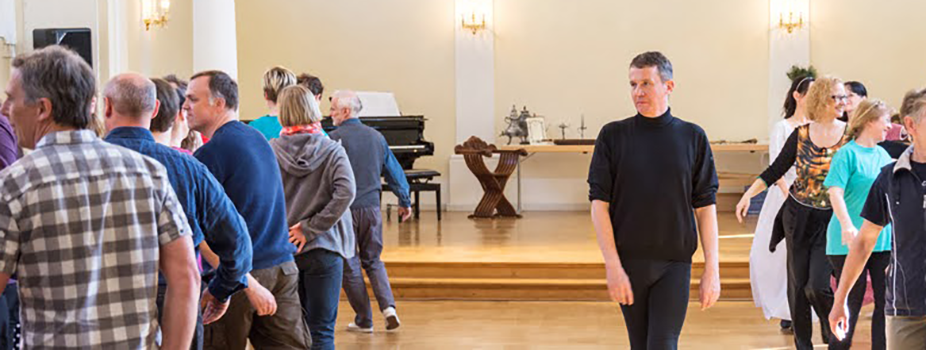
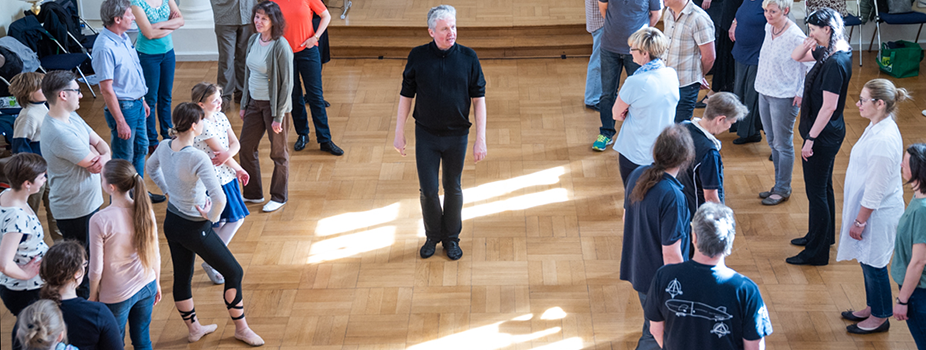
High above, on the second floor of this history-steeped residence, the splendid Helmhalle opens its doors to us for our weekend. Here, architecture and natural idyll join hands in delightful fashion, as the house sits picturesquely directly upon the banks of the Pegnitz. Stepping to the window during dance pauses, one is rewarded with a magnificent, unobstructed vista over the rooftops of Fürth and the sweeping green meadows of the Pegnitz.
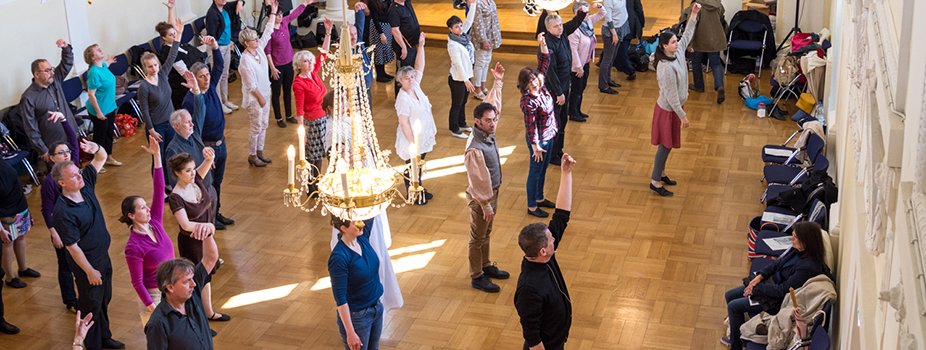
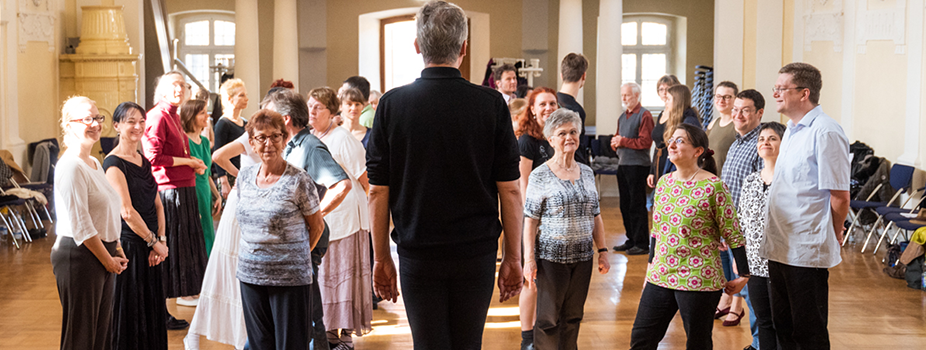
The interior of the spacious hall exudes a distinct, irresistible charm of its own. Beautiful old, exposed roof timbers support the room, lending it not only a warm, welcoming ambience, but also outstanding acoustics for musical accompaniment. The walls are adorned with original Belle Époque rough-cast stucco, which subtly bears witness to the artisanal mastery and elegance of bygone days. At the same time, large window fronts bathe the parquet in daylight, creating a remarkably pleasant, bright, and focused learning environment.
III. The Perfect Place for Our Preparation
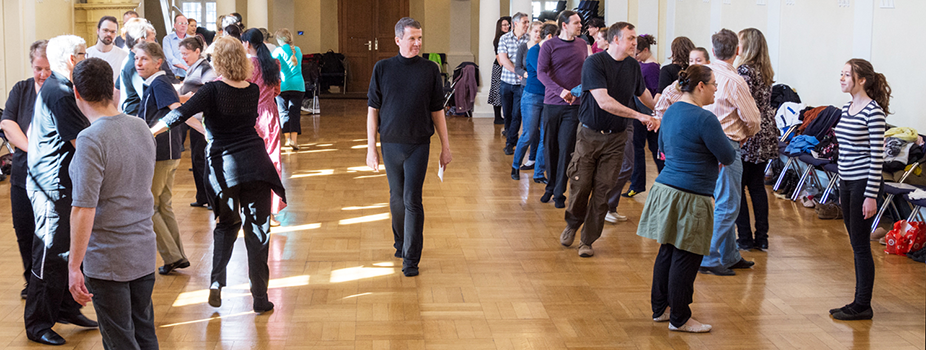
Where today the neighbouring Heinrich-Schliemann-Gymnasium provides space for physical activity, we find the ideal conditions to prepare for the Grand Ball. Away from urban bustle and surrounded by the historical flair of the early 20th century, the Helmhalle affords us that undisturbed setting we require to rehearse the lively contredanses, graceful cotillons, and fine etiquette of the Regency era together and with great pleasure.
IV. The Art of Dancing:
From Thorough Pedagogy to Grace
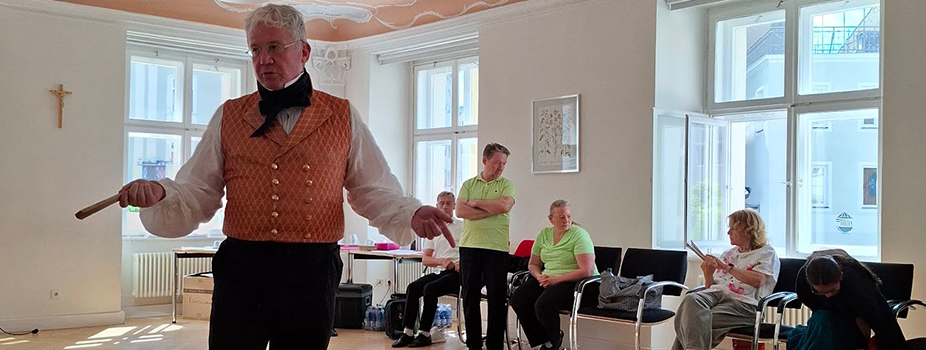
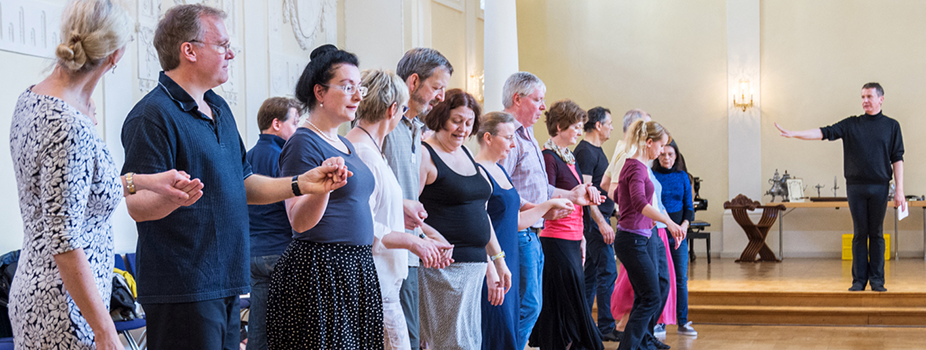
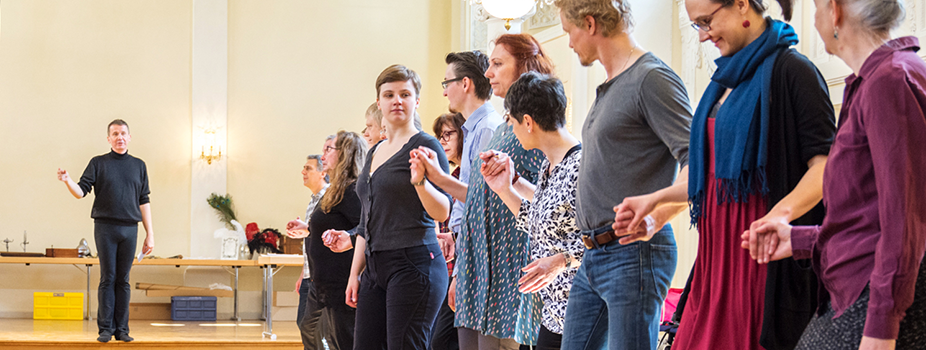
When imparting historical dances, I gladly make use – with a gentle twinkle in the eye – of the time-honoured "Nuremberg teaching method". In the spirit of the legendary Nuremberg Funnel, knowledge during our hours is thoroughly imbued into the mind until it almost overflows. Yet this intensive, at times demanding work has a most compelling reason: only those who command the figures, spatial pathways, and steps with absolute ease can conjure that effortless grace and carefree elegance onto the parquet on the evening of the grand ball which our epoch demands.
V. Understanding the Origin and the Purpose
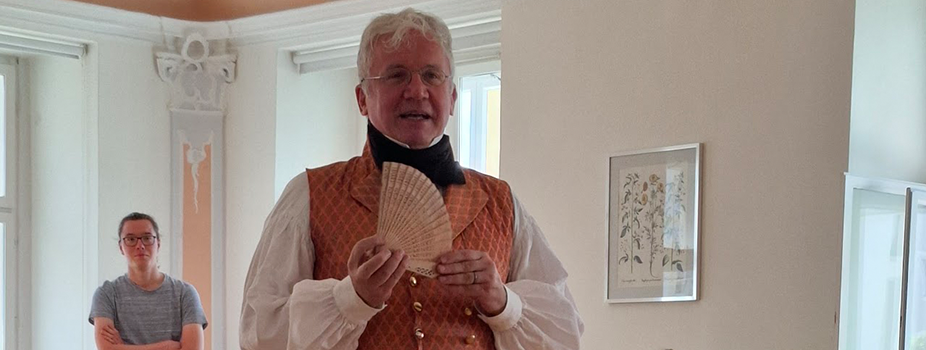
It is by no means sufficient for me merely to dictate a bare sequence of steps. It is my heartfelt desire throughout the instruction always to explore the whence and the why. We derive the movements directly from fascinating dance history and illuminate the complex social context of the time.
Every contredanse, every delicate gesture, and every symmetrical formation circa 1800 was far more than an agreeable pastime; it was a precise mirror of social etiquette, a silent yet supremely eloquent conversation, and the finest instrument of gallant courtship. Whoever understands and internalises this historical foundation does not merely execute steps – they breathe the history.
VI. True Tact, Measure, and the Courage for Encounter
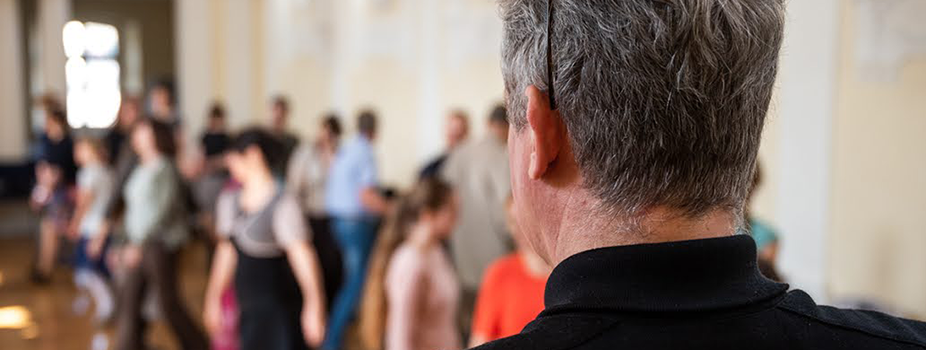
Another unshakeable pillar of my philosophy is tact – in the most wonderful double sense of the word. On the one hand, I expect and foster absolute respect for musical measure, attentive listening, and rhythmic immersion into the masterful melodies that carry us. On the other hand, tact fundamentally represents for me the mindful, courteous, and considerate conduct within the dance set.
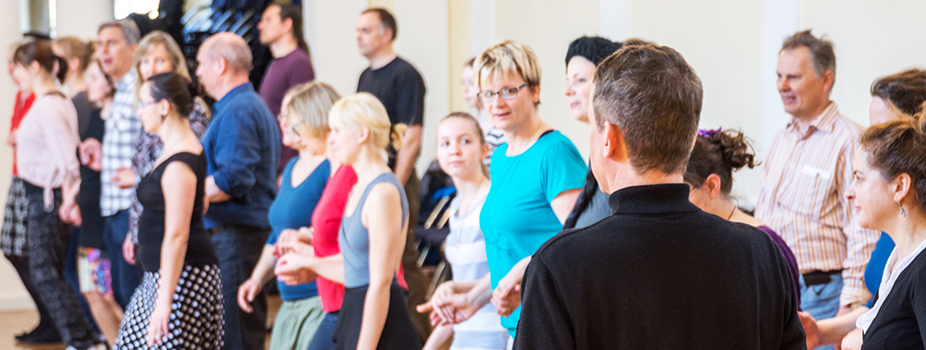
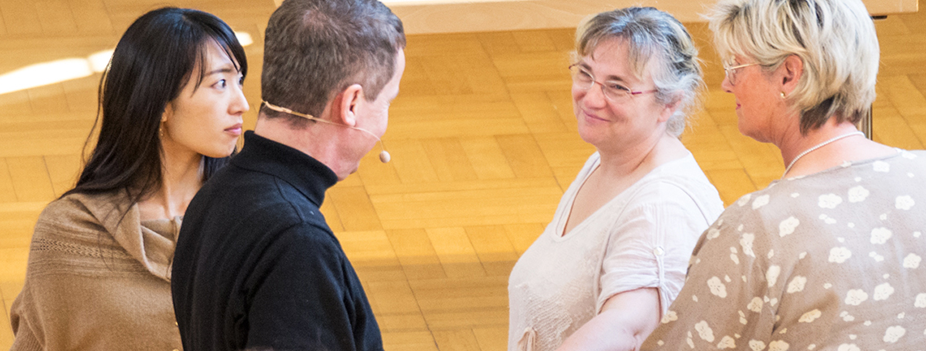
A historical dance is never an isolated solo, but always a shared, fleeting moment of partnership and community. Therefore, I place the utmost importance upon opening ourselves consciously on the parquet once again. It is essential to raise one's focused gaze from the floor, to look one's partner sincerely in the eye, and to bestow a genuine smile. Only when we permit this authentic connection and set aside all hesitation does the true flair of the Regency era awaken to full, vibrant life.